Tourist attractions in Calçoene
Heritage and history
Rêgo Grande I Archaeological Site — Solstício
Calçoene, AP
Indigenous archaeology among granite megaliths.
Automatic translation. This text was translated from Portuguese by artificial intelligence and has not yet been reviewed by a person.
Visits only with authorization
This place cannot be visited freely: you need authorization before you go.
Arrange a guided visit with Iepa’s Archaeological Research Unit and confirm opening before travelling. The park project does not mean unrestricted access is available.
Getting here and around · Calçoene ↗
Photos
Select a photo to enlarge it. Captions identify the place and the source.
-
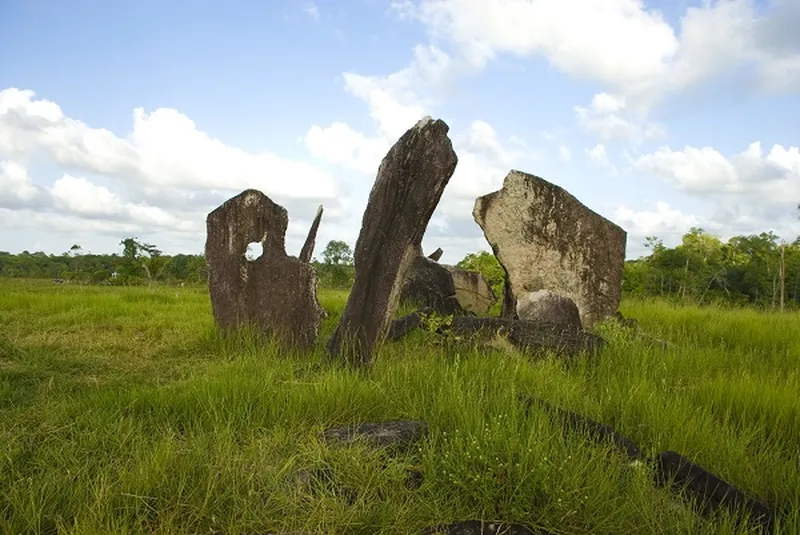
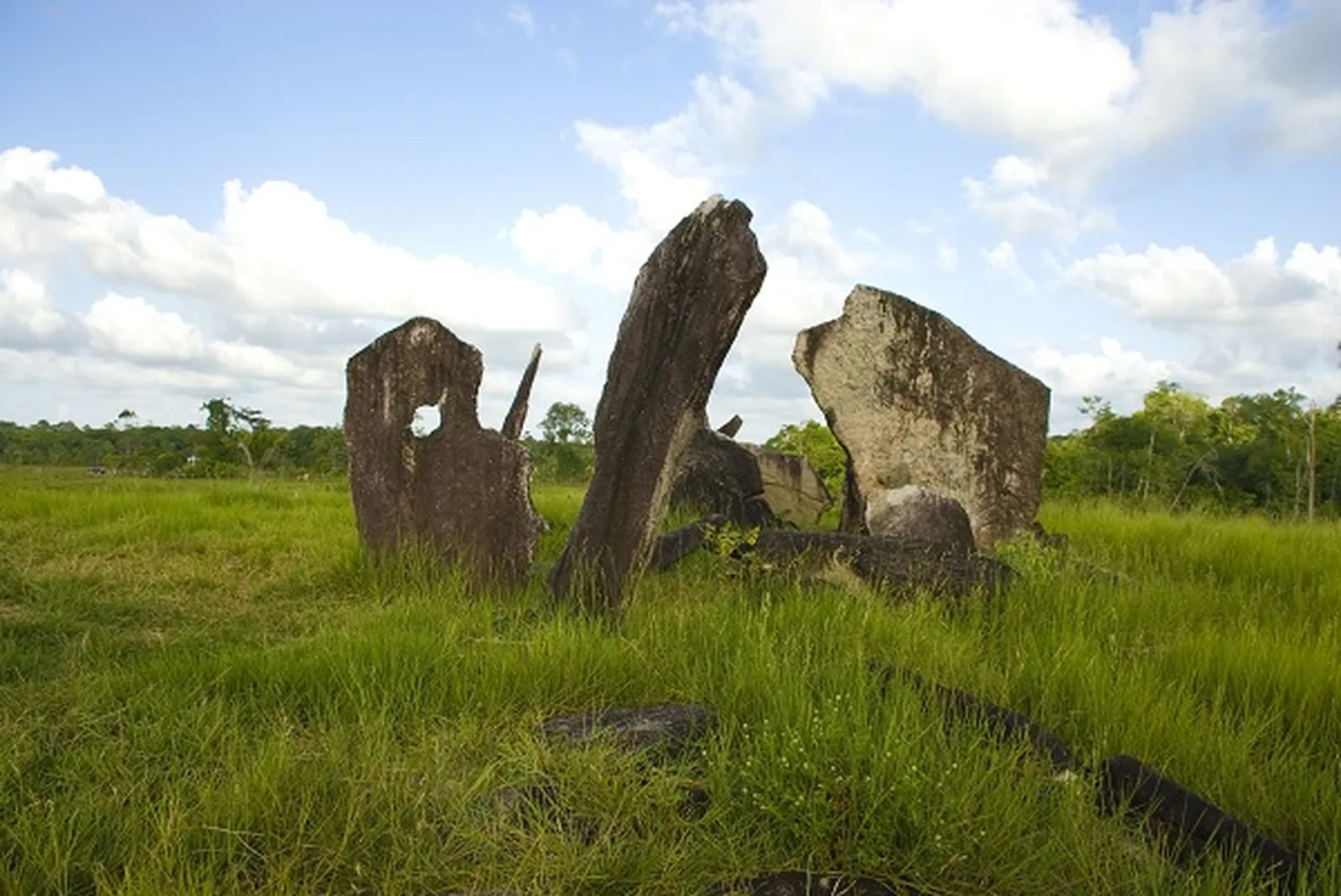
Megaliths at Solstice Archaeological Park in Calçoene. Photo: Governo do Amapá · CC BY 3.0 — Licence & original
Discover this place
Listen to the story
Automatic reading of the text below in its available language. Offline use requires a voice installed on this device.
Read-aloud requires a compatible browser voice. The full text is available below.
Rêgo Grande I, in Calçoene, preserves a monumental landscape built by Indigenous peoples before European colonisation. Large granite blocks are associated with funerary contexts. Archaeological research has recovered urns and pottery fragments, showing that the stones belonged to wider social and ritual practices.
IEPA’s work in the Calçoene river basin since the 2000s has expanded knowledge of this heritage. Studies of burial pits also examine ceramic decoration and the knowledge involved in making the vessels. Possible astronomical connections should be presented as research interpretations, without reducing the site’s history to a comparison with Stonehenge.
During a visit, consider the arrangement of stones and their relationship with the landscape. Confirm access and guided-visit conditions with the management. Do not climb megaliths, move fragments or remove anything: the position of material is itself archaeological evidence.
Sources & information
- Iphan — Projeto Parque do Solstício Accessed on 2026-09-22
- Scientific Journal ANAP — Pesquisa de turismo no Cabo Orange e agendamento no sítio Rêgo Grande I, 2023 Accessed on 2026-09-22
- IEPA — Contribuições para o Desenvolvimento Sustentável no Amapá: pesquisa arqueológica Accessed on 2026-09-22
- UFPA — Caderno 4 Campos: cerâmicas do poço funerário de Rêgo Grande I Accessed on 2026-09-22
- UFMG — pesquisa sobre granito, cerâmicas e megalitismo em Rêgo Grande I Accessed on 2026-09-22